
The Challenge
Young people across Africa are navigating complex and rapidly changing environments shaped by poverty, violence, climate stress, limited educational opportunities, and structural inequities. These conditions heighten vulnerability to mental health challenges, yet access to care remains extremely limited.
Despite the urgency, youth mental health remains one of the most underfunded and underprioritized areas of public health in Africa, with limited awareness, limited professional support, and a gap in systemic support.
Statistics
Our work is shaped by what young people tell us and what our research and programme data consistently show. By listening, learning, and testing what works on the ground, we gain a clear understanding of the real challenges young people face and design responses that are practical, relevant, and effective.
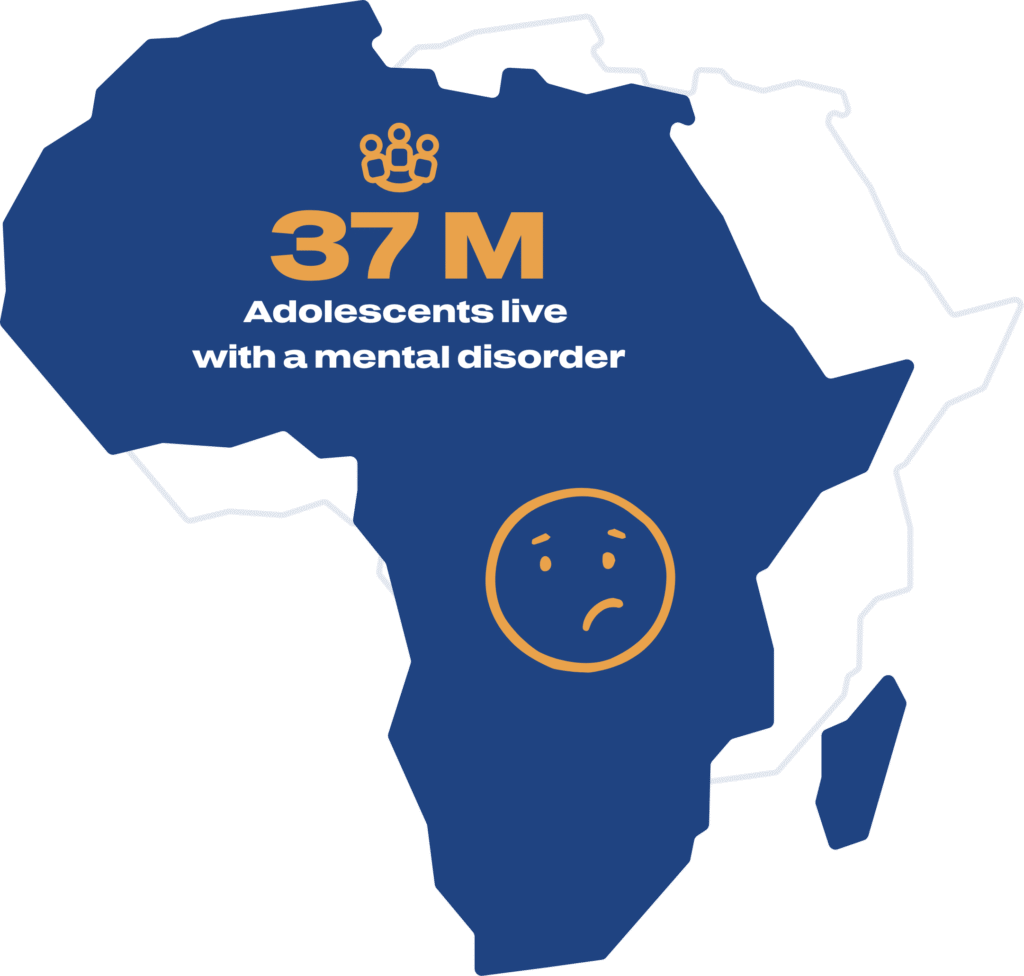
37 million adolescents in Africa live with a mental disorder
A UNICEF–WHO analysis shows that the continent carries one of the world’s highest burdens, yet receives the least investment.
Systemic Gaps
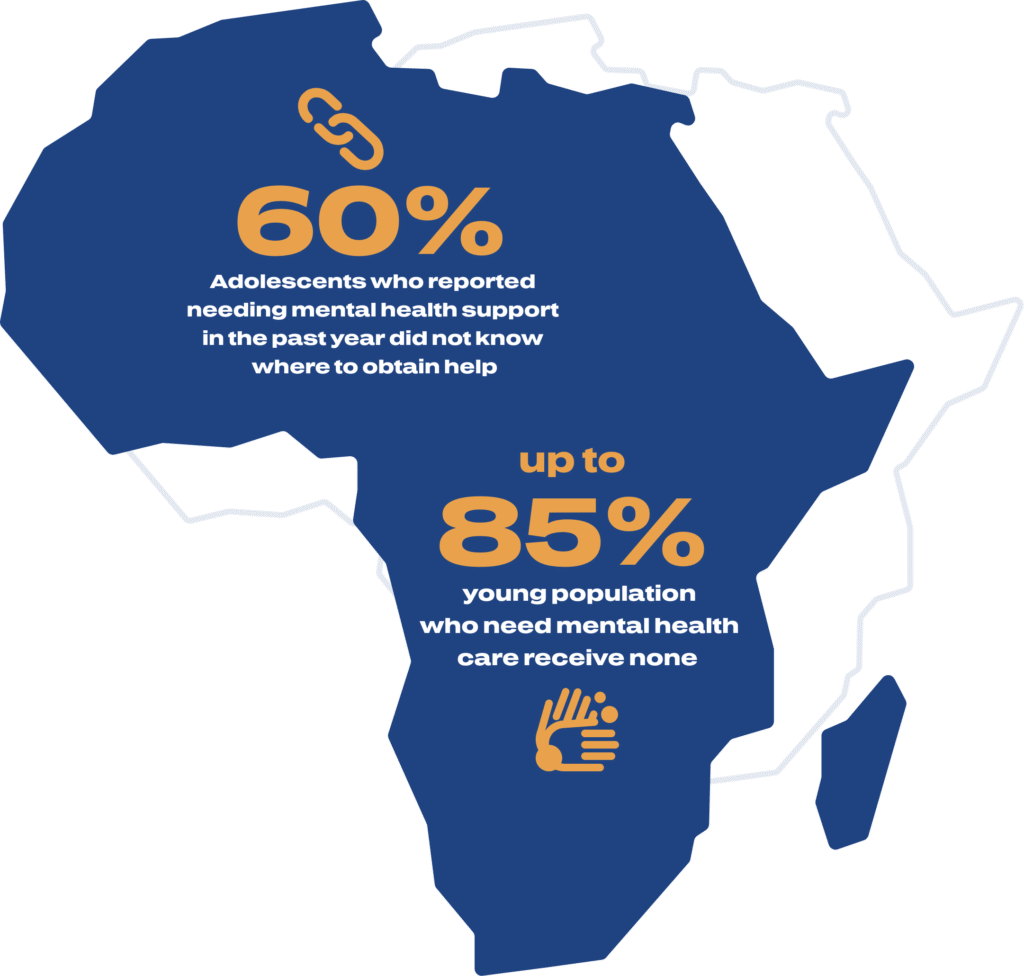
60% of adolescents who reported needing mental health support in the past year did not know where to obtain help
reflecting a substantial gap in mental health literacy and effective behavioural change communication across the region. Source: UNICEF 2023
Up to 85% of young people who need mental health care receive none
Africa has fewer than 0.1 psychiatrists per 100,000 people, the lowest rate globally. Source: WHO (2023)
Focus Area Statistics
1 in 3 young women experience gender-based violence before age 18
GBV is a leading driver of trauma, depression, anxiety, and suicide risk among adolescent girls. Source: WHO (2021)
1 in 7 adolescents globally engages in harmful substance use
Early exposure (as early as age 12–14) is linked to long-term mental health challenges and school dropout. Source: UNODC (2023)
SRHR without Mental Health Support is Incomplete Care
Early pregnancy, sexual violence, and HIV are closely linked to depression and anxiety among adolescents in sub-Saharan Africa, yet SRHR services rarely integrate mental health care, leaving a critical service gap. Source: Mutumba et al., 2023, BMC Public Health.
Mental and the Climate
Climate change is a growing driver of anxiety, trauma, and psychosocial stress, yet mental health is rarely integrated into climate adaptation and disaster-response systems in Africa. Source: WHO (2022).
Our Interventions
MHYI’s interventions are designed to respond to the real and complex factors shaping young people’s mental well-being. Grounded in research, informed by lived experiences, and led by youth, our programmes combine awareness, support, creativity, and advocacy to create practical pathways for healing, resilience, and long-term change.
We address the social determinants of youth mental health through four (4) interconnected thematic areas and youth mental health through four (4) integrated intervention streams, each grounded in evidence, trauma-informed practice, and youth leadership.
4 Programmatic Pillars
Our Programmatic Pillars are the core areas through which we drive impact, equipping young people and communities with the knowledge, support, and opportunities to thrive.
Awareness, Education and Youth Leadership
We promote mental health literacy and empower young people to become advocates for well-being through awareness campaigns, peer education, community engagement, digital storytelling, and behaviour change initiatives that address stigma, gender-based violence, sexual and reproductive health, substance abuse, and climate-related mental health challenges.
01

Psychological Support & Health Systems Strengthening
We improve access to safe, confidential, and youth-friendly mental health support by providing counselling services, mental health first aid training, community-based support systems, and effective referral pathways. Through integrated care and trusted networks, we connect young people with timely, appropriate support while fostering environments where they can seek help with confidence and dignity.
02
Mental Wellness, Behaviour Modification & Creative Expression
We promote resilience, healthy coping, and emotional well-being by equipping young people with practical life skills, positive coping strategies, and opportunities for creative expression. Through arts-based interventions, physical wellness activities, and structured support, we create safe spaces that encourage healing, self-discovery, stronger relationships, and lasting positive behaviour change.
03
Research, Evidence & Policy Advocacy
We generate evidence and drive systems change by conducting research, producing policy and knowledge resources, and advocating for stronger mental health systems. By partnering with governments, institutions, communities, and young people, we co-design evidence-based solutions that influence policy, strengthen services, and improve mental health outcomes.
04
4 Thematic Focus Areas
Gender‑Based Violence (GBV)
Prevention of violence, support for survivors, and promotion of safer communities through education, advocacy, and psychosocial support.
Substance Abuse
Reduction of harmful substance use among youth, early identification, and harm‑reduction strategies integrated into mental health programmes.
Sexual and Reproductive Health and Rights (SRHR)
Strengthening access to youth‑friendly SRHR services and integrating mental health support into SRHR programming.
Climate Change
Addressing climate‑related stress and anxiety, building resilience among youth living in climate‑affected communities, and advocating for mental health‑sensitive climate policies.Addressing climate‑related stress and anxiety, building resilience among youth living in climate‑affected communities, and advocating for mental health‑sensitive climate policies.
Integration Across the 4 Pillars
To advance mental health awareness, deliver accessible,
high-quality support services, and catalyse systems and partnerships that enable young people to lead healthy, fulfilled, and impactful lives.
Our Strategic Direction
To advance mental health awareness, deliver accessible,
high-quality support services, and catalyse systems and partnerships that enable young people to lead healthy, fulfilled, and impactful lives.